

Every summer, homeowners across the UK start noticing increased wasp activity around their gardens, patios, lofts, sheds, and outdoor eating areas. What may begin as the occasional wasp near a window or barbecue can quickly develop into a much larger problem if a nest is established nearby.
Many people assume wasps appear out of nowhere, but there are specific reasons why their numbers increase dramatically during the summer months. Understanding why wasps are attracted to your property can help you identify potential nesting sites early and reduce the risk of a growing infestation.
This guide explains why wasps suddenly appear around UK homes in summer, where they build nests, what attracts them, and when professional wasp control becomes necessary.
Why Wasps Become More Active During Summer
Wasps follow a predictable annual cycle in the UK. Their activity levels change significantly throughout the year, which is why most people only notice them during the warmer months.
The Queen Wasp Starts a New Colony in Spring
Each spring, fertilised queen wasps emerge from hibernation and begin searching for suitable nesting locations.
Common nesting sites include:
- Loft spaces
- Roof voids
- Sheds
- Garages
- Wall cavities
- Under decking
- Garden structures
The queen begins building a small nest and lays the first generation of worker wasps.
Colonies Grow Rapidly Through Summer
Once worker wasps emerge, their primary role is to expand and maintain the nest.
Throughout June, July and August:
- The nest grows larger
- More workers are produced
- Food demand increases
- Wasp activity becomes more visible
By late summer, some nests can contain several thousand wasps.
Why Are There Suddenly So Many Wasps Around My House?
One of the most common questions homeowners ask is why wasps seem to appear overnight.
In most cases, it is because a nearby nest has reached a size where worker wasps are actively foraging.
Natural Food Sources Increase
Summer provides a wide range of food sources for wasps.
These include:
- Flower nectar
- Ripening fruit
- Tree sap
- Garden plants
As natural food becomes more abundant, wasp activity around homes becomes more noticeable.
Human Food Attracts Wasps
Wasps are highly attracted to food and drink.
Common attractants include:
- Sugary drinks
- Ice cream
- Fruit juice
- Outdoor dining
- Barbecues
- Food waste
A single outdoor meal can attract multiple foraging workers from a nearby nest.
Sweet Foods Become More Important Later in Summer
During late summer, wasp behaviour often changes.
Worker wasps become increasingly attracted to sugary substances because the colony’s food requirements shift.
This is why wasps can seem particularly aggressive around:
- Soft drinks
- Beer gardens
- Outdoor cafes
- Picnic areas
Where Do Wasps Build Nests Around UK Homes?
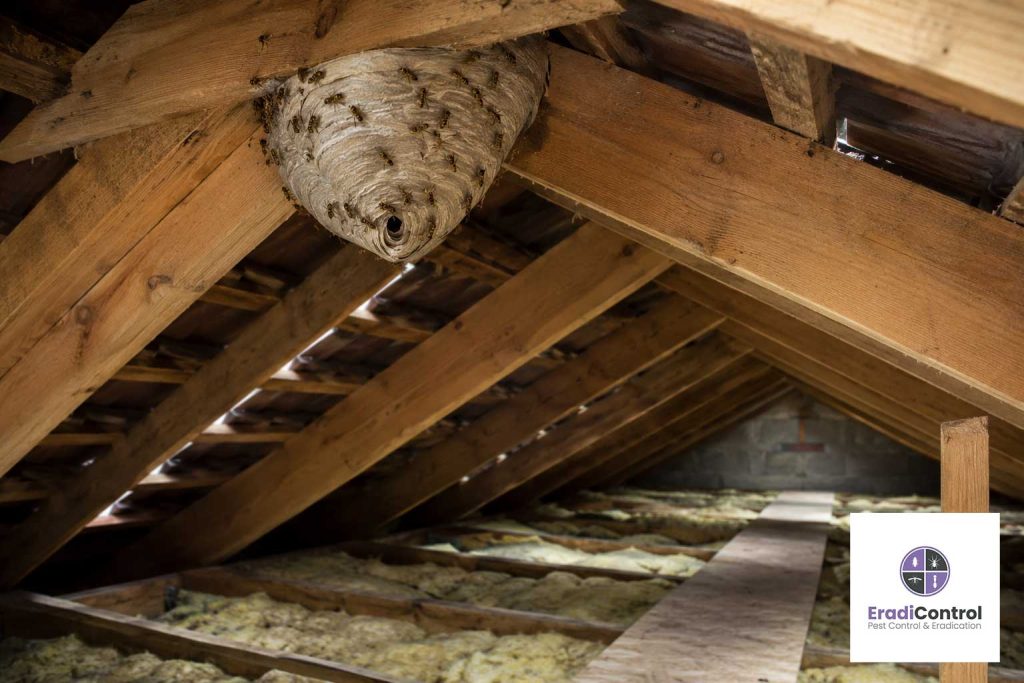
Wasps prefer sheltered, undisturbed locations that offer protection from weather and predators.
Loft Spaces
Lofts are among the most common nesting locations in the UK.
Lofts provide:
- Warm temperatures
- Shelter from rain
- Minimal disturbance
- Easy access through vents and gaps
Many homeowners remain unaware of a nest until wasp activity becomes visible outside.
Sheds and Garages
Sheds and garages are another favourite location.
Wasps often build nests:
- Between roof timbers
- Inside wall cavities
- Beneath shelving
- Near roof joints
Because these spaces are not used constantly, nests can grow undetected.
Wall Cavities
Small gaps in brickwork can allow wasps to access hidden voids within walls.
In these situations, homeowners may only notice:
- Repeated wasp activity near a single point
- Buzzing sounds inside walls
- Increased indoor activity
Roof Voids and Soffits
Gaps around rooflines and soffits provide easy access to sheltered nesting areas.
These locations often support larger colonies because they remain relatively undisturbed.
Signs You May Have a Wasp Nest Nearby
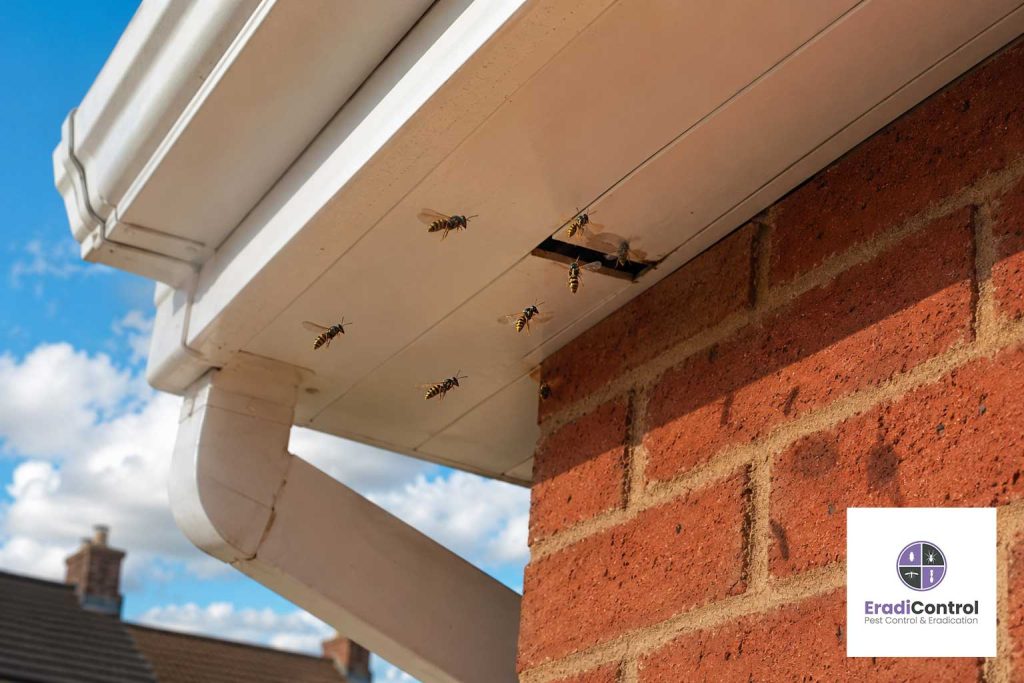
Early identification is important because nests continue growing throughout the summer.
Common signs include:
Repeated Flight Paths
Wasps travelling repeatedly to and from the same location often indicate an active nest.
Watch for:
- Wasps entering roof spaces
- Activity around air bricks
- Entry points near soffits
- Movement into sheds or garages
Increased Numbers Around the Property
A sudden increase in visible wasps often indicates a nearby colony.
This is particularly noticeable during warm afternoons.
Buzzing Sounds
Large nests hidden in walls or lofts may produce an audible buzzing sound.
The noise is usually most noticeable during warmer parts of the day when activity levels increase.
Why Wasps Can Become a Serious Problem
Although wasps play an important role in the ecosystem, they can create significant risks around homes and businesses.
Risk of Stings
Wasps can sting repeatedly and may become defensive if they feel their nest is threatened.
This can create problems for:
- Children
- Pets
- Garden users
- Tradespeople
Allergic Reactions
While most stings cause localised pain and swelling, some individuals can experience severe allergic reactions requiring urgent medical attention.
Risk to Businesses
Commercial premises can experience particular difficulties with wasps.
Businesses affected may include:
- Restaurants
- Cafes
- Pubs
- Schools
- Care homes
- Food manufacturers
Where food hygiene and customer safety are involved, professional commercial pest control may be required.
What Not to Do if You Find a Wasp Nest
Many homeowners attempt to remove nests themselves.
This is one of the most common causes of multiple stings.
Avoid:
- Knocking down nests
- Blocking nest entrances
- Spraying household chemicals
- Disturbing active nests
These actions often trigger defensive behaviour from the colony.
Can Wasp Nests Be Left Alone?
In some circumstances, small nests located well away from human activity may be left alone.
However, nests located:
- Near entrances
- In lofts
- In sheds
- Near gardens
- Close to public access areas
should be assessed carefully.
A nest that appears small in June may become a significant problem by August.
When Professional Wasp Control Is Recommended
Professional wasp control should be considered when:
- A nest is located near occupied areas
- Wasp numbers continue increasing
- The nest is inaccessible
- Children or vulnerable individuals are present
- The property is commercial
Professional treatment provides a safer and more effective solution than DIY removal attempts.
How Professional Wasp Control Works
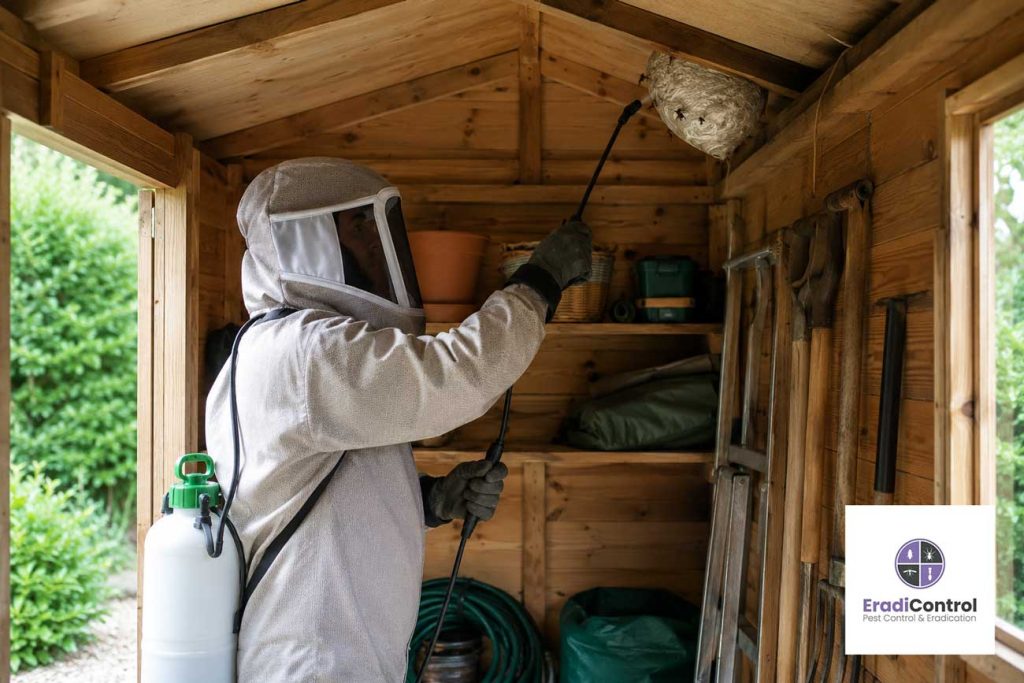
Professional treatment typically involves:
Inspection
The nest location and activity levels are assessed.
Targeted Treatment
Professional products are applied directly to the nest.
Monitoring
Activity reduces significantly over the following days as the colony collapses.
Advice and Prevention
Recommendations help reduce the likelihood of future nesting activity.
Where wasps are entering through roof spaces, additional preventative measures may be recommended alongside broader insect control services.
Preventing Wasp Nests Around Your Property
Although it is impossible to eliminate all risk, several measures can help reduce the likelihood of nesting.
These include:
- Repairing damaged soffits
- Sealing gaps around rooflines
- Maintaining sheds and outbuildings
- Managing food waste properly
- Keeping bin lids closed
- Removing fallen fruit from gardens
Regular property inspections during spring can identify nesting activity before colonies become established.
FAQs About Wasps Around UK Homes
Professional Help With Wasp Problems
If wasps are becoming a problem around your home or business, early action is often the safest and most effective solution.
For professional wasp control, expert insect control services, and rapid response when needed, contact Eradicontrol for advice and treatment tailored to your property.
Identifying and treating nests early helps prevent larger infestations, reduces risks to family members and visitors, and allows you to enjoy your outdoor spaces throughout the summer.
 Domestic Pest Control
 Commercial Pest Control
 Eco-Friendly Pest Control
 Emergency Pest Control


Leave a Reply