

Cockroaches are one of the pests no restaurant, takeaway or food business wants to find. Unfortunately, commercial kitchens can provide almost everything they need to survive: warmth, moisture, food residues and plenty of narrow spaces where they can remain hidden.
The problem is often well established before somebody sees the first live insect.
For restaurants, cafés, takeaways, pubs, hotels and other food businesses in Southampton, this makes early detection particularly important. A few insects hidden behind refrigeration equipment or inside a service void can develop into a much more difficult problem if the source is not identified quickly.
Businesses concerned about pest activity can arrange professional pest control in Southampton to identify what is happening and determine whether treatment, monitoring or preventative work is required.
This guide explains why cockroaches are particularly suited to commercial kitchens, how infestations can begin, where they commonly hide, what warning signs staff should recognise and why simply spraying the insects you can see rarely solves the underlying problem.
Why Commercial Kitchens Provide Ideal Conditions for Cockroaches
Cockroaches need three basic things to survive: food, moisture and shelter.
A busy commercial kitchen can unintentionally provide all three throughout the year.
Unlike many outdoor insects whose activity changes significantly with the British seasons, cockroaches living inside heated buildings are protected from much of the colder weather. Kitchens, plant rooms, boiler areas and spaces around electrical equipment can remain warm even through autumn and winter.
There is also a constant supply of potential food.
It does not necessarily take discarded meals or overflowing bins to support cockroach activity. Small quantities of grease, crumbs, food deposits underneath equipment and residue around preparation areas can be enough.
Moisture is equally important.
Leaking pipework, condensation, drainage areas, sinks, dishwashing equipment and spaces underneath refrigeration units can all create favourable conditions.
The final ingredient is shelter.
Commercial kitchens contain an enormous number of narrow gaps that may rarely be disturbed during normal cleaning. Cockroaches have flattened bodies that allow them to hide inside cracks and crevices, beneath equipment, around pipework and behind fitted units.
That combination makes commercial food premises very different from a clean, open room where pest activity would be quickly noticed.
Which Cockroaches Are Found in UK Commercial Premises?
Several species can occasionally occur in Britain, but German cockroaches and Oriental cockroaches are two of the species most commonly associated with UK buildings.
Correct identification matters because different species prefer different environments and may behave differently within a property.
German Cockroaches
German cockroaches are relatively small, light brown insects with two darker longitudinal markings behind the head.
They are particularly well suited to warm, humid indoor environments and are frequently associated with catering premises.
Commercial kitchens provide numerous attractive harbourages, including:
- behind refrigerators and freezers
- beneath ovens and cooking equipment
- around motors and electrical equipment
- inside gaps around fitted kitchen units
- close to sinks and dishwashers
- around warm pipework
- inside cracks behind splashbacks or wall coverings
Their small size means a substantial amount of activity can remain hidden from staff during normal opening hours.
They can also reproduce relatively quickly when conditions are favourable, which is one reason early detection is so important.
Oriental Cockroaches
Oriental cockroaches are larger and considerably darker, usually appearing dark brown or almost black.
They are more strongly associated with cooler, damp areas and may be encountered around:
- drains
- basements
- cellars
- service ducts
- waste areas
- boiler rooms
- damp voids
- pipework
In a commercial building, the place where the insects are seen is not necessarily where the main harbourage is located.
An Oriental cockroach appearing near a kitchen, for example, may have travelled from another part of the building or through service routes connected to neighbouring areas.
That is why identifying the species and inspecting the wider premises is more useful than simply treating the exact spot where an insect happened to be found.
How Cockroaches Get Into Southampton Restaurants and Takeaways
Finding cockroaches does not automatically mean a restaurant has poor hygiene.
Good hygiene makes an infestation less likely to become established, but cockroaches can be introduced into well-managed premises in several ways.
Deliveries and Packaging
Food businesses receive frequent deliveries.
Cardboard boxes, packaging, crates, equipment and stock can potentially provide transport or shelter for insects.
This is one reason deliveries should be inspected rather than moved immediately into food preparation or storage areas.
Where possible, unnecessary external packaging should not be allowed to accumulate within stockrooms.
Second-Hand Equipment
Used refrigerators, catering appliances, shelving and other equipment can sometimes introduce pests if they have previously been stored or used in an infested building.
Commercial equipment contains motors, insulation, electrical components and enclosed spaces that can provide excellent harbourage.
Any second-hand catering equipment should therefore be inspected and thoroughly cleaned before being introduced into a working kitchen.
Shared Buildings
Some restaurants and takeaways occupy units within larger buildings.
Neighbouring businesses may share:
- service ducts
- pipe routes
- wall cavities
- bin areas
- basements
- drainage systems
- communal corridors
Cockroaches do not understand tenancy boundaries.
Treating one unit without investigating surrounding areas can therefore leave the original source untouched.
Waste and Service Areas
External bin stores and internal waste areas require particularly careful management.
Food deposits, liquids, damaged bins and accumulated packaging can create attractive conditions, especially when these areas are close to kitchen entrances or service doors.
Good waste management will not eliminate an established cockroach infestation by itself, but it removes potential food sources and makes long-term pest management considerably easier.
Why Cockroach Infestations Can Remain Hidden
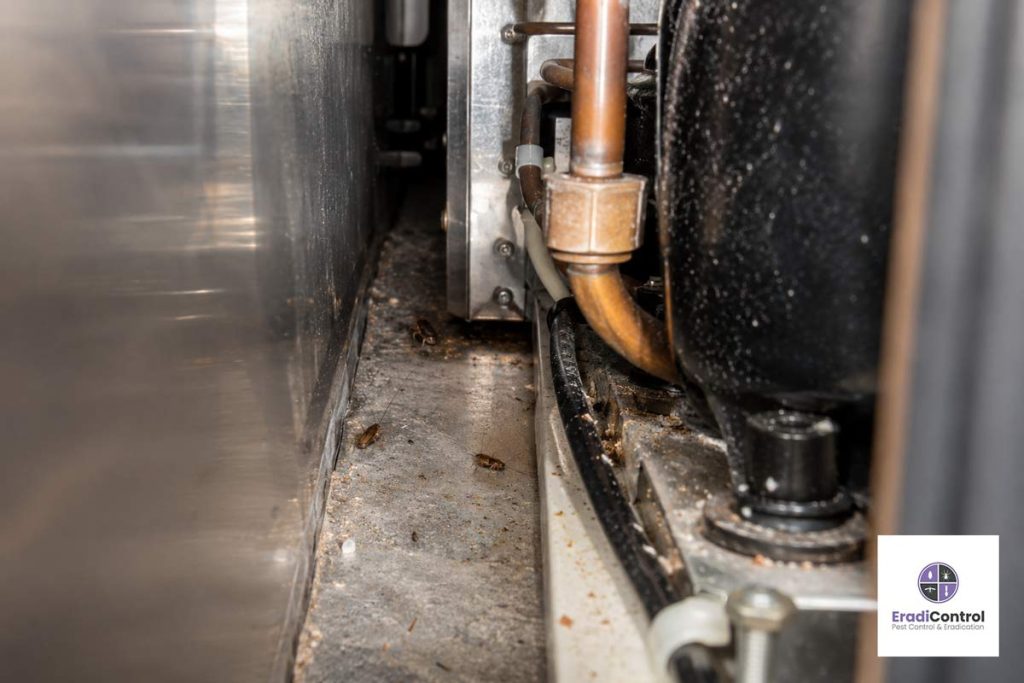
One of the biggest difficulties with cockroaches is that the insects spend much of their time concealed.
They generally prefer dark, protected harbourages and are often most active when a premises is quiet.
A restaurant can therefore operate throughout the day without anybody seeing obvious activity.
Once the kitchen closes, lighting is reduced and equipment is left undisturbed, cockroaches may emerge to feed.
The next morning they can be hidden again before staff arrive.
Commercial Equipment Creates Deep Harbourages
A domestic refrigerator can usually be moved reasonably easily.
A commercial kitchen is different.
Large refrigerators, ovens, preparation counters, dishwashers and fitted cooking equipment may remain in the same position for years.
Grease, crumbs and moisture can accumulate underneath or behind machinery despite otherwise good cleaning routines.
Warm motors and compressors also provide particularly attractive conditions for German cockroaches.
This means routine surface cleaning alone may never reach the areas where insects are actually living.
Signs of Cockroaches in a Commercial Kitchen
Seeing a live cockroach is the most obvious warning sign, but businesses should not rely on sightings alone.
Staff responsible for opening, closing and cleaning a kitchen should know what else to look for.
Droppings
Small cockroach droppings may appear as dark specks around harbourages and feeding areas.
Likely locations include:
- underneath equipment
- inside cupboards
- around shelving
- behind refrigeration units
- near pipework
- around electrical equipment
Heavy accumulations usually indicate an area worth investigating more closely.
Egg Cases
Cockroach egg cases, known as oothecae, may occasionally be found in protected areas.
Their appearance varies according to species.
Finding an egg case is significant because it indicates reproductive activity rather than an insect simply passing through the premises.
Shed Skins
Young cockroaches shed their outer skin as they develop.
Finding these cast skins around cracks, equipment or storage areas can therefore be another indication of an established population.
Unusual Odours
Larger cockroach infestations can sometimes produce a noticeable unpleasant or musty odour.
An unexplained smell around enclosed kitchen equipment, storage areas or voids should not be ignored, particularly when combined with other evidence.
Live Insects at Night
Businesses sometimes discover cockroach activity when somebody enters the kitchen after closing.
An insect disappearing underneath refrigeration equipment when the lights are switched on should be investigated rather than dismissed.
A single sighting does not tell you how large the population is, but in a food business it is enough to justify a closer inspection.
Why Cockroaches Are a Food Hygiene Concern
Cockroaches move between waste areas, drains, hidden voids and food environments.
This creates an obvious contamination risk when the same insects then travel across work surfaces, storage areas, equipment or food preparation spaces.
Food businesses therefore need to take evidence of pest activity seriously.
Good food hygiene management includes preventing pest access, checking premises for signs of activity and maintaining the building so pests cannot easily find food or harbourage.
Southampton food businesses are also subject to local authority food hygiene inspections, so pest prevention needs to be part of everyday kitchen management rather than something considered only after an infestation develops.
For restaurants, cafés, hotels, pubs, takeaways and other hospitality businesses, professional commercial pest control can also provide routine monitoring and help identify developing problems before they become obvious to customers or staff.
Could Cockroaches Affect a Food Hygiene Rating?
The Food Hygiene Rating Scheme does not simply assign a rating based on whether one particular pest has been seen.
Inspectors consider the wider standard of food hygiene, the physical condition of the premises and how effectively food safety is being managed.
However, evidence of cockroach activity, contaminated areas, inadequate cleaning or poor pest management can clearly become relevant during an inspection.
The more important point for a business owner is that pest activity should never be allowed to continue until the next scheduled inspection.
Records showing that a problem was identified promptly, investigated and properly addressed are very different from allowing an infestation to develop unchecked.
Why DIY Cockroach Sprays Often Fail in Restaurants
When somebody sees a cockroach running across a kitchen floor, the immediate reaction may be to reach for an insect spray.
The insect that has been seen, however, is rarely the most important part of the problem.
The real issue is where the cockroaches are harbouring.
Aerosol sprays may kill exposed insects but do little to reach populations hidden:
- behind kitchen units
- beneath machinery
- inside cracks
- around electrical equipment
- inside service voids
- behind wall coverings
Random spraying can also complicate professional treatment.
Cockroach control often relies on careful placement of monitoring devices, insecticidal baits or other targeted treatments. Applying unsuitable products around these areas can interfere with a planned treatment programme.
Pesticides should never be applied casually around food preparation environments.
Products must be suitable for their intended use and used strictly according to their instructions.
For an established infestation, professional cockroach control is normally the safer and more reliable approach.
What Professional Cockroach Treatment Involves
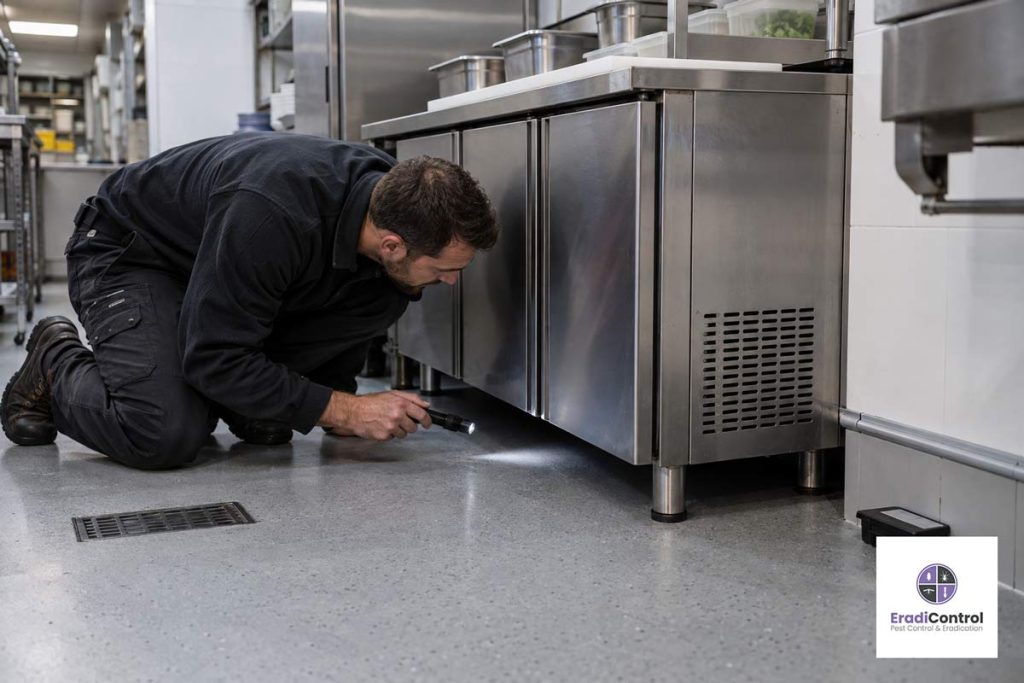
Effective cockroach treatment begins with inspection.
Simply treating visible insects without understanding where they are coming from can result in the same problem returning.
Species Identification
Identifying whether the problem involves German, Oriental or another cockroach species helps determine where technicians should concentrate their investigation.
Finding Harbourages
Inspections may focus on warm equipment, cracks, pipework, service ducts, drainage areas, food stores and other protected locations.
The technician is looking for more than live insects.
Droppings, egg cases, cast skins and patterns of activity can help identify where the population is concentrated.
Monitoring
Purpose-designed monitoring traps can help establish where cockroaches are active and whether treatment is working.
Monitoring is particularly useful in larger kitchens because an absence of daytime sightings does not necessarily mean the infestation has been removed.
Targeted Treatment
Treatment will depend on the species, layout of the premises and extent of the infestation.
Professional cockroach management may involve carefully placed insecticidal baits and other approved targeted treatments rather than simply spraying an entire kitchen.
The objective is to treat harbourages while minimising unnecessary pesticide use within sensitive food environments.
Follow-Up Visits
Cockroach treatment may require more than one visit.
Eggs, hidden harbourages and activity in neighbouring areas can all affect how quickly an infestation is brought under control.
Monitoring after the initial treatment helps confirm whether activity is decreasing and whether additional areas need attention.
What Restaurant Owners Can Do to Reduce the Risk

Professional pest control is important when an infestation is present, but prevention depends heavily on day-to-day management.
Inspect Deliveries
Staff receiving deliveries should watch for insects, damaged packaging or unusual contamination.
Suspicious goods should not automatically be taken into food stores.
Clean Beneath Equipment
Cleaning schedules should include difficult areas, not just visible worktops and floors.
Movable equipment should be pulled out periodically so staff can clean underneath and behind it.
Where equipment cannot easily be moved, these areas should still be incorporated into deep-cleaning procedures.
Remove Food Residues
Pay particular attention to grease and food debris around:
- cookers
- fryers
- preparation equipment
- shelving
- floor edges
- refrigeration units
Small residues that appear insignificant can still provide food for insects.
Repair Leaks
Even minor leaks provide a reliable water source.
Check pipework beneath sinks, dishwashers, refrigeration equipment and toilets.
Condensation problems should also be addressed.
Manage Waste Carefully
Food waste should be contained in suitable bins and removed regularly.
Bins should be kept clean, fitted with appropriate lids and positioned so that waste areas do not become pest harbourages.
Reduce Clutter
Unused cardboard, old stock, redundant equipment and packaging create hiding places.
Removing unnecessary materials also makes inspection and cleaning considerably easier.
Seal Gaps Where Appropriate
Cracks around pipe penetrations, skirting, wall junctions and service routes should be repaired where practical.
Proofing needs to form part of general building maintenance rather than being treated as a substitute for dealing with an active infestation.
Why Staff Reporting Matters
Staff are often the first people to notice early pest activity.
A cleaner may see an insect underneath equipment.
A chef may notice unusual droppings behind a refrigerator.
Someone opening the kitchen early may see movement when the lights are switched on.
These observations should be reported immediately rather than ignored because only one insect was seen.
Early reporting can mean dealing with a small, localised problem rather than discovering a much larger infestation several weeks later.
Businesses should also make sure staff know who is responsible for reporting pest concerns and where pest-control records are kept.
Cockroaches in Multi-Unit Commercial Buildings
Cockroach management becomes more complicated when restaurants and takeaways share a larger building.
The affected business may have excellent cleaning standards while insects are entering through pipework or service voids from another unit.
In these situations, treating only the visible activity inside one kitchen can produce temporary results.
The wider building may need investigation.
Particular attention should be given to shared:
- basements
- bin stores
- service risers
- drainage routes
- ceiling voids
- pipe ducts
- utility areas
Property managers, landlords and neighbouring businesses may need to cooperate if activity extends beyond a single tenancy.
Should a Restaurant Close If a Cockroach Is Found?
Finding one cockroach does not automatically answer whether a premises needs to close.
The appropriate response depends on where the insect was found, the amount of activity, whether food may have been contaminated and whether the infestation can be safely contained.
What should not happen is simply ignoring the sighting.
Any potentially contaminated food should be dealt with appropriately, the area should be inspected and the source investigated.
Where significant pest activity is present in food preparation or storage areas, professional advice should be sought quickly.
Cockroaches Are Easier to Control When Found Early
Cockroach problems rarely improve through waiting.
The longer insects have access to warm harbourages, moisture and food, the more opportunity the population has to become established and spread into additional parts of the building.
Restaurants and takeaways also contain many interconnected spaces, which means a population can become considerably more difficult to locate once it has moved behind equipment and through service voids.
Early investigation usually gives a pest technician a much clearer picture of where the infestation began.
For Southampton businesses, that makes prompt reporting, good kitchen management and routine pest monitoring far more valuable than reacting only when customers or staff start seeing insects regularly.
Frequently Asked Questions About Cockroaches in Southampton Food Businesses
Cockroaches can occur in restaurants and other food premises anywhere in the UK. Commercial kitchens provide warmth, moisture, food and sheltered harbourages, which means an introduced cockroach population can become established if it is not detected early.
Not necessarily, but the sighting should be investigated. Cockroaches spend much of their time hidden, so one visible insect may be the first sign of additional activity elsewhere within the premises.
German cockroaches are commonly associated with warm areas around refrigeration motors, ovens, dishwashers, pipework, kitchen units and electrical equipment. Oriental cockroaches are more likely to be associated with damp areas, drains, basements, cellars and service voids.
Cockroaches or egg cases can potentially be introduced with packaging, stock, equipment and other incoming goods. Checking deliveries and avoiding unnecessary accumulation of cardboard can reduce this risk.
Yes. Cockroaches can be introduced through deliveries, equipment or neighbouring units. Good hygiene reduces available food and makes infestations harder to establish, but cleanliness alone cannot guarantee that pests will never enter a building.
Cleaning is an essential part of control because it removes food residues and allows harbourages to be inspected more easily. It will not normally eliminate an established infestation on its own because cockroaches can remain hidden inside cracks, equipment and structural voids.
There is no single timescale. The species involved, size of the population, building layout, number of harbourages and whether neighbouring areas are affected all influence treatment. Follow-up monitoring is often important to confirm that activity has stopped.
Food businesses benefit from regular inspections and clear pest reporting procedures, particularly where there is frequent stock movement, food waste or shared building infrastructure. Monitoring can identify activity before it becomes an obvious infestation.
Professional Cockroach Control for Southampton Businesses
Cockroaches are particularly difficult pests because the insects visible in a kitchen may represent only a small part of the activity hidden elsewhere.
For restaurants, takeaways, cafés, pubs, hotels and commercial kitchens, identifying the source quickly is important for protecting food, staff, customers and the reputation of the business.
If you have found cockroaches, droppings, egg cases or unexplained insect activity in a commercial premises, Eradicontrol can inspect the property, identify the likely source and recommend an appropriate treatment and monitoring programme.
Our Southampton pest control team supports businesses across the area with practical pest management focused on identifying the cause of the problem, controlling existing activity and reducing the risk of it returning.
Early intervention is considerably easier than trying to deal with a cockroach population after it has spread through several parts of a commercial building.
 Domestic Pest Control
 Commercial Pest Control
 Eco-Friendly Pest Control
 Emergency Pest Control


Leave a Reply