

September is one of the busiest times of year for people moving into rented accommodation across Southampton. Students arrive with suitcases, bedding and furniture, tenants change properties, landlords prepare rooms for new occupants, and hotels and serviced accommodation continue welcoming visitors.
All of that movement creates opportunities for bed bugs to be transported from one property to another.
Bed bugs are not caused by poor hygiene. They are highly effective hitchhikers that travel in luggage, clothing, bedding, furniture and other belongings. A clean flat in Highfield is just as capable of developing an infestation as a busy HMO in Portswood or a hotel room in Southampton city centre.
The difficulty is that bed bugs are very good at remaining hidden. A small number can settle around a bed or sofa and remain unnoticed until bites, spotting or live insects eventually reveal the problem.
For tenants, homeowners, landlords and accommodation providers, recognising the early warning signs is important. If you already suspect an infestation, experienced pest control in Southampton can help establish whether bed bugs are present and determine the most appropriate treatment.
Why September Can Be an Important Time for Bed Bugs in Southampton
Bed bugs can survive inside heated buildings throughout the year, so they are not a purely seasonal pest in the same way as wasps or some outdoor insects.
September is significant for a different reason: people move.
Southampton has large numbers of students, private tenants, visitors and short-term occupants moving between properties. Each move can involve:
- Suitcases
- Bedding
- Clothing
- Mattresses
- Sofas
- Desks and chairs
- Storage boxes
- Second-hand furniture
If bed bugs or their eggs are hidden within those belongings, they can be introduced into the next property.
This does not mean every shared house or student property is at risk of infestation. It simply means that frequent movement between buildings increases the number of opportunities for bed bugs to travel.
Student Accommodation Creates Regular Turnover
Areas such as Portswood, Highfield and Swaythling have large amounts of student housing, including HMOs, flats and shared houses.
At the beginning of the academic year, several people may move into the same property within days of each other. Some may have travelled internationally, stayed in hotels, moved from previous accommodation or purchased second-hand furnishings.
A bed bug introduced into one bedroom can remain unnoticed while the occupant settles in.
If the problem is not identified, the insects may gradually spread to:
- Other beds
- Sofas
- Adjacent rooms
- Shared furniture
- Personal belongings
Prompt reporting is therefore important in shared properties.
Rental Property Changes Can Disturb Hidden Bed Bugs
A vacant property can sometimes appear pest-free because there is nobody present for bed bugs to feed on.
When new occupants move in, vibrations, body heat and carbon dioxide can stimulate activity from insects that have remained hidden.
This can lead to a frustrating situation where a tenant notices bites shortly after moving into a property and assumes the infestation must have arrived with them.
In reality, establishing the source can be difficult. Bed bugs may have been present before the tenancy, or they may have arrived with furniture, luggage or belongings during the move.
The important first step is not assigning blame. It is confirming whether bed bugs are actually present.
What Are Bed Bugs?
Bed bugs are small, wingless insects that feed on blood.
The common bed bug found in UK properties, Cimex lectularius, is adapted to living close to people.
Adult bed bugs are:
- Flat and oval shaped
- Usually brown in colour
- Around the size of an apple pip when fully grown
- More swollen and reddish after feeding
Young bed bugs, known as nymphs, are smaller and paler, making them even harder to see.
Bed bugs cannot fly or jump. They move by crawling and usually remain close to areas where people spend long periods resting.
This is why beds, sofas and upholstered furniture are such common harbourage areas.
How Bed Bugs Enter Southampton Properties
Luggage After Travel
Travel is one of the best-known ways bed bugs move between buildings.
A suitcase placed close to an infested bed can provide an easy hiding place. The traveller then unknowingly transports the insect to another hotel, flat or home.
Southampton’s position as a major port city, combined with its universities, hotels and busy transport connections, means people are constantly moving through the area.
The risk is not the destination itself. It is the movement of belongings between different sleeping environments.
Second-Hand Furniture
Buying used furniture is common among students, renters and homeowners.
Most second-hand furniture is perfectly safe, but upholstered items should be inspected carefully before being brought indoors.
Particular caution should be taken with:
- Mattresses
- Bed frames
- Headboards
- Sofas
- Armchairs
- Upholstered ottomans
Bed bugs can hide inside joints, stitching, screw holes and fabric folds where they are difficult to spot.
Visitors and Overnight Guests
Bed bugs can occasionally be carried into a property with bags or belongings belonging to visitors.
Again, this is not about cleanliness. Someone may be completely unaware they have encountered bed bugs elsewhere.
Moving Between Rooms
Once bed bugs become established, moving belongings from an affected bedroom into other rooms can spread the infestation.
One common mistake is taking bedding, clothes or furniture from an affected room and placing them elsewhere without appropriate precautions.
This can turn a localised problem into a property-wide infestation.
Early Signs of Bed Bugs in a Southampton Property
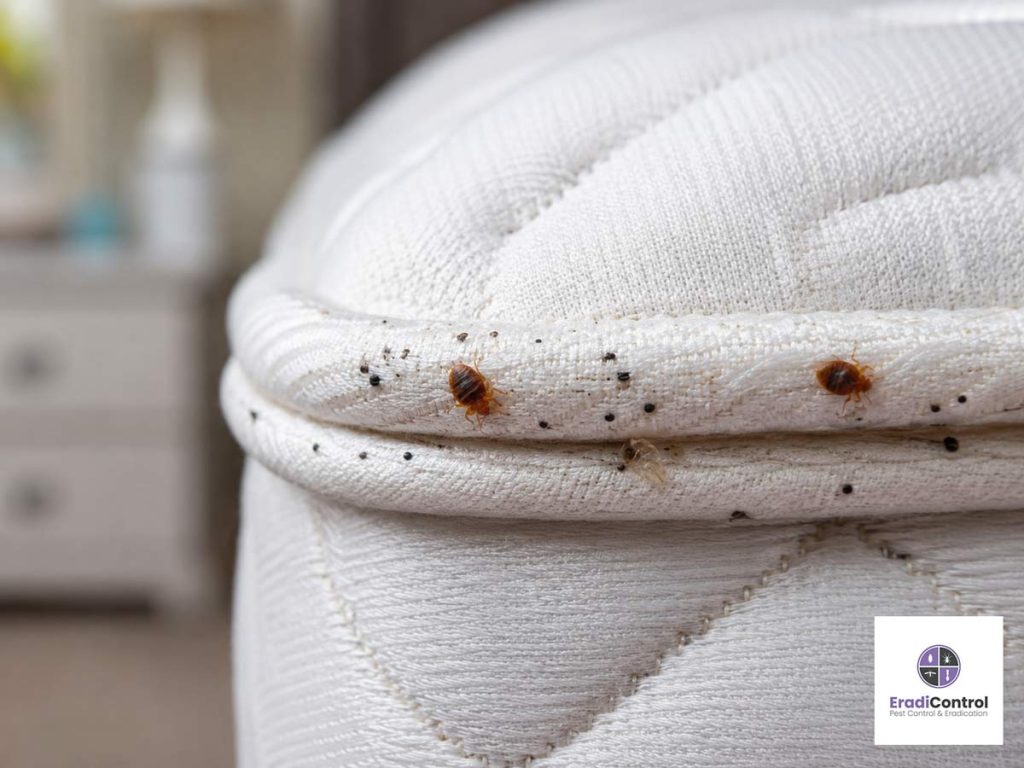
Detecting an infestation early can significantly reduce how far it spreads.
If you are unsure what you are looking for, our detailed guide explains how to tell if you have bed bugs.
Bites After Sleeping
Bed bug bites are often the first reason people become suspicious.
They may appear as:
- Small red marks
- Itchy raised areas
- Clusters
- Lines of bites
Common areas include:
- Arms
- Legs
- Neck
- Shoulders
- Back
However, bites alone cannot confirm bed bugs.
Different people react differently. Some develop obvious marks, while others show very little reaction.
Other insects and skin conditions can also produce similar symptoms.
Dark Spots Around the Mattress
Bed bug faecal spotting can appear as small dark marks around harbourage areas.
Check:
- Mattress seams
- Bed frame joints
- Headboards
- Bedside furniture
- Skirting boards close to the bed
Clusters of spotting around cracks or seams can be an important clue.
Small Blood Marks on Bedding
Occasional small blood spots may appear on sheets or pillowcases.
Again, this alone does not prove there is an infestation, but combined with other signs it deserves further investigation.
Shed Skins
As young bed bugs develop, they shed their outer skins.
These pale empty casings can sometimes be found around:
- Mattress seams
- Headboards
- Furniture joints
- Skirting edges
Live Bed Bugs
Finding an actual bed bug provides the clearest evidence.
If possible, avoid crushing or disposing of the insect immediately. A clear photograph or contained specimen can help with identification.
Where Bed Bugs Hide in Bedrooms
Bed bugs favour narrow, sheltered cracks close to their host.
Mattress Seams and Labels
Inspect:
- Piping
- Stitching
- Labels
- Buttons
- Corners
Do not assume that finding nothing on the visible mattress surface means the bed is clear.
Bed Frames
Wooden and metal bed frames contain numerous possible harbourage points.
These include:
- Screw holes
- Bolt holes
- Slat supports
- Frame joints
- Cracks in timber
Divan bases can offer particularly extensive hiding space beneath fabric coverings.
Headboards
Headboards fixed against a wall can create an ideal narrow void.
Upholstered headboards contain additional folds, seams and fixing points.
Furniture Near the Bed
As an infestation develops, bed bugs may spread into:
- Bedside tables
- Wardrobes
- Drawers
- Chairs
- Sofas
This is one reason treatment should focus on the room rather than only the mattress.
Why Bed Bugs Can Be Difficult in Shared Houses and HMOs

A student or rental property may contain several bedrooms connected by hallways and shared living spaces.
When an infestation is identified in one room, it is important to consider the wider property.
Bed bugs can spread when:
- Residents move belongings between bedrooms
- Upholstered furniture is shared
- Infested bedding is carried through communal areas
- Occupants begin sleeping in different rooms
- Furniture is discarded and moved through the building
In some situations, insects may also move through structural gaps between adjoining areas.
This is why simply treating the bed belonging to the person being bitten may not be sufficient.
An assessment should consider where activity is occurring and whether neighbouring rooms need checking.
Why Bed Bugs Are Not a Sign of a Dirty Property
This misconception causes unnecessary embarrassment and can delay reporting.
Bed bugs are interested in access to a host, not whether a room is clean or untidy.
They can infest:
- Luxury hotels
- Family homes
- Student halls
- Private rentals
- HMOs
- Care settings
- Serviced apartments
Clutter can make an infestation harder to treat because it creates more hiding places, but clutter does not cause bed bugs.
A well-maintained room can still develop an infestation after a single introduction.
This is an important message for landlords and property managers. Tenants should feel able to report suspected activity immediately rather than hiding the problem because they are worried about being blamed.
Why DIY Bed Bug Treatment Often Fails
Bed bugs are among the more difficult household insects to eliminate without a structured treatment programme.
Treating Only the Mattress
Bed bugs rarely remain only on the mattress.
Treating the mattress while ignoring:
- The bed frame
- Headboard
- Skirting
- Furniture
- Cracks
- Nearby upholstered items
can leave large parts of the infestation untouched.
Supermarket Sprays May Scatter Activity
Repeatedly spraying individual insects may kill some visible bed bugs but fail to control those hidden elsewhere.
Poorly targeted treatment can also cause insects to move deeper into cracks or adjoining areas.
Eggs Can Be Difficult to Reach
Eggs are small and usually laid inside protected harbourages.
A treatment programme therefore needs to account for different stages of the lifecycle rather than focusing only on visible adults.
Moving Rooms Can Spread the Problem
Someone experiencing bites may decide to sleep on the sofa or move into another bedroom.
Unfortunately, this can encourage bed bugs to follow their food source and establish activity in a second area.
Where possible, seek professional guidance before relocating sleeping arrangements.
Our guide to getting rid of bed bugs permanently explains why a complete approach is needed rather than relying on isolated DIY measures.
Professional Bed Bug Treatment in Southampton
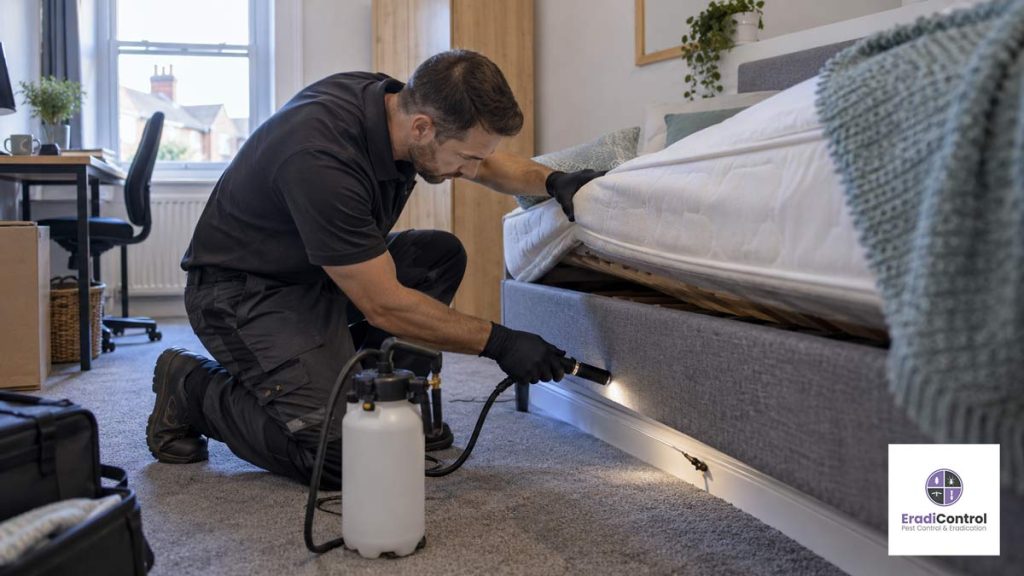
Established infestations usually require a methodical inspection and treatment programme.
Professional bed bug treatment starts by confirming the pest and assessing how widely activity has spread.
Depending on the property and infestation, this may involve inspecting:
- Beds
- Mattresses
- Headboards
- Bedroom furniture
- Skirting boards
- Sofas
- Adjoining rooms
Treatment must reach the areas where insects are harbouring rather than simply treating open floor space.
Preparation may also be required before treatment. Instructions should be followed carefully, as excessive clearing or moving belongings can spread insects unnecessarily.
Bed bugs are part of the wider range of pests covered by professional insect control, but their behaviour means they require a very different approach from ants, flies or wasps.
Bed Bugs in Southampton Rental Properties
Bed bugs can create difficult situations between tenants and landlords because determining exactly how an infestation arrived is not always straightforward.
A practical approach is more useful than immediately trying to assign responsibility.
Tenants should:
- Report suspected activity promptly
- Avoid moving furniture between rooms
- Follow preparation instructions carefully
- Avoid applying multiple DIY pesticides before an inspection
Landlords and managing agents should:
- Investigate reports promptly
- Consider whether previous occupants reported similar problems
- Arrange appropriate inspection where necessary
- Consider adjoining rooms in shared properties
- Keep accurate treatment records
Responsibility for treatment can depend on the circumstances, tenancy arrangements and how the infestation arose, so it should not be assumed automatically that either the tenant or landlord is responsible in every case.
During tenant changes, landlords and agents may also find end of tenancy pest treatment relevant where a property needs professional pest management before it is reoccupied.
Bed Bug Problems in Southampton Hotels and Guest Accommodation
Hotels, guesthouses and serviced accommodation face a particular challenge because occupants change frequently.
A bed bug introduction does not mean poor housekeeping. Even very well-run accommodation can receive an insect inside a guest’s luggage.
The difference is how quickly the problem is identified and managed.
Staff should be trained to recognise:
- Faecal spotting
- Shed skins
- Guest reports of bites
- Live insects around beds
- Unusual spotting around headboards
Rooms suspected of bed bug activity should be investigated quickly.
Moving furniture or bedding into other rooms without precautions can spread the infestation.
For accommodation providers, professional commercial pest control also provides a wider approach to monitoring and managing pest risks across the premises.
What Students Should Do if They Find Bed Bugs
Discovering bed bugs shortly after moving into accommodation can be stressful, but there are several things students should avoid doing.
Do not immediately:
- Throw the mattress outside
- Move into a housemate’s bedroom
- Carry bedding through the property uncovered
- Spray every surface with household insecticide
- Move furniture into communal areas
Instead:
- Photograph any insects or spotting you find.
- Report the problem to the landlord, halls team or managing agent.
- Keep belongings within the affected area until advice is provided.
- Follow professional preparation instructions carefully.
- Avoid bringing additional second-hand furniture into the room.
Moving quickly but methodically helps reduce the chance of spreading the infestation.
Can Bed Bugs Spread Between Flats?
They can, although the most common form of spread remains the movement of infested belongings and furniture.
In buildings containing adjoining flats or rooms, established infestations may occasionally move through structural gaps.
This means a serious infestation in one unit can sometimes justify checking neighbouring areas, particularly where there is evidence of movement beyond the original room.
Property managers dealing with repeated reports should consider the building as a whole rather than automatically treating each complaint as an unrelated event.
Preventing Bed Bugs When Moving Into Southampton Accommodation
It is impossible to guarantee that bed bugs will never be introduced, but sensible precautions can reduce the risk.
Inspect the Bed When You Move In
Before unpacking completely, check:
- Mattress seams
- Headboard edges
- Bed frame joints
- Divan bases
You are looking for live insects, dark spotting and shed skins.
Keep Luggage Away From Beds Initially
Avoid placing suitcases directly on beds when arriving from another property or hotel.
Inspect Second-Hand Furniture
Check used furniture carefully before bringing it inside.
Pay particular attention to upholstered furniture and bed frames.
Be Careful After Travelling
After staying away from home:
- Inspect luggage
- Wash suitable clothing
- Check suitcase seams
- Avoid placing luggage directly on the bed
Report Problems Early
One of the most effective forms of prevention in shared accommodation is early reporting.
A small infestation affecting one room is easier to manage than an established problem involving several bedrooms.
When Bed Bug Activity Needs Urgent Professional Attention
Bed bugs do not normally present the same immediate medical danger as wasps or some other pests, but there are circumstances where prompt treatment is particularly important.
These include:
- Activity in several bedrooms
- Bed bugs spreading into communal areas
- Repeated bites despite previous treatment
- An infestation affecting vulnerable occupants
- Multiple complaints within an HMO
- Bed bugs affecting hotel rooms
- A significant infestation discovered immediately before new tenants arrive
Where the situation requires rapid assistance, Emergency Pest Control provides a route to professional advice.
Why Local Bed Bug Control Matters in Southampton
Southampton contains a particularly varied mix of property types.
A treatment plan for a student HMO in Portswood may be very different from one required for:
- A city centre apartment
- A family home in Bitterne
- A rented property in Shirley
- Student accommodation in Highfield
- A shared house in Swaythling
- A hotel close to Southampton city centre
Understanding the property type and how occupants use the building is important because bed bugs spread through human behaviour as much as through the physical structure itself.
Experienced Southampton pest control specialists can assess both the infestation and the practical circumstances surrounding it.
Acting Early Can Prevent a Much Larger Bed Bug Problem
The most important thing to understand about bed bugs is that delaying action rarely helps.
One or two insects hidden around a bed can develop into a larger infestation. Once people begin moving bedding, furniture and belongings between rooms, the problem can become considerably more difficult to contain.
September is an especially sensible time for Southampton landlords, students and accommodation providers to stay alert because so many people are moving into new properties.
Check beds when moving in, inspect second-hand furniture, report suspicious activity quickly and avoid moving affected belongings around the building.
If you find live bed bugs, repeated spotting or other convincing evidence of an infestation, contact Eradicontrol for professional pest control in Southampton before the problem spreads further.
Frequently Asked Questions About Bed Bugs in Southampton
Bed bugs can occur anywhere people regularly sleep and move between properties. Student accommodation can be vulnerable because of frequent tenant turnover, shared furniture, luggage and people moving between rooms.
They are usually introduced in luggage, furniture, clothing, bedding or other personal belongings. They do not appear because a property is dirty.
Yes. Bed bugs can spread when belongings are moved between rooms or when occupants begin sleeping elsewhere. In established infestations they may also move through structural gaps.
Responsibility depends on the circumstances, tenancy agreement and likely origin of the infestation. Tenants should report suspected bed bugs promptly so the problem can be investigated.
No. Bed bugs feed on people and can infest very clean properties. Good housekeeping may make inspection easier, but cleanliness alone does not prevent bed bugs.
Yes. Any upholstered furniture where people spend long periods sitting or sleeping can provide suitable harbourage.
Not automatically. Many mattresses can be treated. Disposing of furniture unnecessarily can be expensive and may spread bed bugs through communal areas.
DIY treatment often misses insects and eggs hidden inside bed frames, furniture, cracks and other harbourages. Treating only visible bed bugs does not address the entire infestation.
The rate varies depending on infestation size and how people use the property. Moving bedding, furniture or sleeping arrangements can accelerate spread between rooms.
Professional help is recommended when live bed bugs are found, signs persist, several rooms may be affected or DIY measures have failed. Early intervention generally makes containment easier.
 Domestic Pest Control
 Commercial Pest Control
 Eco-Friendly Pest Control
 Emergency Pest Control


Leave a Reply