

Wasp activity around Southampton properties often becomes much more noticeable during August and September. A few wasps seen around the garden earlier in summer can suddenly turn into a constant stream of insects entering a roofline, wall cavity, shed or loft.
This increase does not usually mean a nest has appeared overnight. In most cases, the colony has been developing quietly for several months. By late summer, it may contain thousands of wasps, with large numbers of workers travelling between the nest and nearby food sources.
Homes, rental properties and businesses across Shirley, Portswood, Bitterne, Woolston, Bassett, Highfield, Hedge End and Southampton city centre can all be affected. Wasp nests are not limited to rural areas or neglected buildings. A small gap beneath a roof tile, around a soffit or inside an external wall can provide everything a developing colony needs.
When a nest is positioned close to bedrooms, entrances, outdoor seating or areas used by children, the risk of stings and disruption increases. Experienced pest control in Southampton can identify where the wasps are nesting and determine whether treatment is necessary.
Why Wasp Nests Become More Noticeable in Late Summer
The Colony Has Been Growing Since Spring
Most UK wasp colonies begin in spring when a queen emerges from hibernation and starts searching for a suitable nesting site. She builds a small initial nest, lays eggs and raises the first workers.
Once those workers mature, they take over duties such as:
- Expanding the nest
- Collecting food
- Feeding developing larvae
- Defending the colony
- Maintaining the nest structure
Throughout early and mid-summer, the colony can remain relatively discreet. Wasps may be travelling high above the property or entering through a small opening that is difficult to see from ground level.
By late summer, the nest is much larger and worker numbers have increased substantially. This creates more visible traffic around the entrance.
Worker Wasps Begin Searching More Widely for Sugar
Earlier in the season, worker wasps collect insects and other protein-rich food for developing larvae. In return, the larvae produce a sugary secretion consumed by the adult workers.
As the colony reaches maturity and larval numbers begin to decline, workers have less access to this internal sugar source. They start searching more actively for sweet food elsewhere.
This is why late-summer wasps are often found around:
- Fizzy drinks
- Fruit juice
- Ice creams
- Ripe and fallen fruit
- Outdoor bins
- Café tables
- Beer gardens
- Barbecue areas
The change in feeding behaviour can make wasps appear more persistent, particularly around people eating outdoors.
For a wider explanation of this seasonal behaviour, read our guide to why wasps suddenly appear around UK homes in summer.
Warm Southampton Weather Extends Activity
Southampton’s relatively mild South Coast climate can support wasp activity well into late summer and early autumn. Warm, dry spells allow workers to continue foraging, while gardens, parks, commercial areas and hospitality venues provide reliable food sources.
A nest located close to a Southampton home may therefore remain active for longer than homeowners expect, particularly when September weather stays mild.
Why Southampton Properties Attract Wasp Nests
Rooflines Provide Protected Nesting Spaces
Roof spaces are among the most common locations for wasp nests. Small openings can lead into warm, dry voids that are protected from wind and rain.
Typical access points include:
- Gaps beneath roof tiles
- Openings around soffits
- Damaged fascia boards
- Gaps around guttering
- Ventilation openings
- Cracks around extensions
Older terraced and semi-detached homes in Shirley, Bitterne and Woolston may contain natural gaps created by age, previous building work or weathering. However, modern homes can also have accessible voids around roof joints, vents and service penetrations.
Cavity Walls Offer Concealed Harbourage
Wasps may enter a small hole in external brickwork and build a nest inside the wall cavity. The entrance may be no larger than a mortar gap or opening around a pipe.
Because the nest is hidden, homeowners may only notice:
- A repeated flight path to one point
- Buzzing inside the wall
- Wasps appearing in an upstairs room
- Activity around a window frame
- Wasps emerging around a light fitting
Cavity-wall nests require careful assessment. Spraying the visible entrance or sealing it without treatment can make the situation worse.
Sheds, Garages and Outbuildings Are Often Undisturbed
Garden buildings offer quiet, sheltered nesting sites. Queens may begin nests inside roof spaces, behind stored items or beneath shelving.
Properties with larger gardens in Bassett, Hedge End and surrounding residential areas may have several potential nesting locations, including:
- Sheds
- Garages
- Summerhouses
- Playhouses
- Covered storage areas
- Roofed decking
These spaces may not be entered regularly, allowing a nest to grow unnoticed.
Busy Commercial Areas Provide Food
Portswood and Southampton city centre contain cafés, restaurants, pubs, takeaways, shops and hospitality venues. Outdoor food, waste storage and regular deliveries can attract foraging wasps during late summer.
A nest does not need to be inside the commercial premises to cause a problem. Wasps may travel from nearby roofs, trees, wall cavities or neighbouring buildings to reach food and drink.
Common Places Wasps Build Nests

Wasp nests can develop in many parts of a property. Common locations include:
- Lofts
- Roof voids
- Wall cavities
- Soffits and fascias
- Air vents
- Garages
- Sheds
- Trees and hedges
- Compost areas
- Underground burrows
- Disused animal holes
- Beneath decking
- Inside external storage boxes
The nest itself is made from chewed wood fibres mixed with saliva, creating a light, papery material. Exposed nests may look grey or beige with visible layered patterns.
Many nests are never visible because they are concealed inside the structure of the building.
Signs There May Be a Wasp Nest Nearby
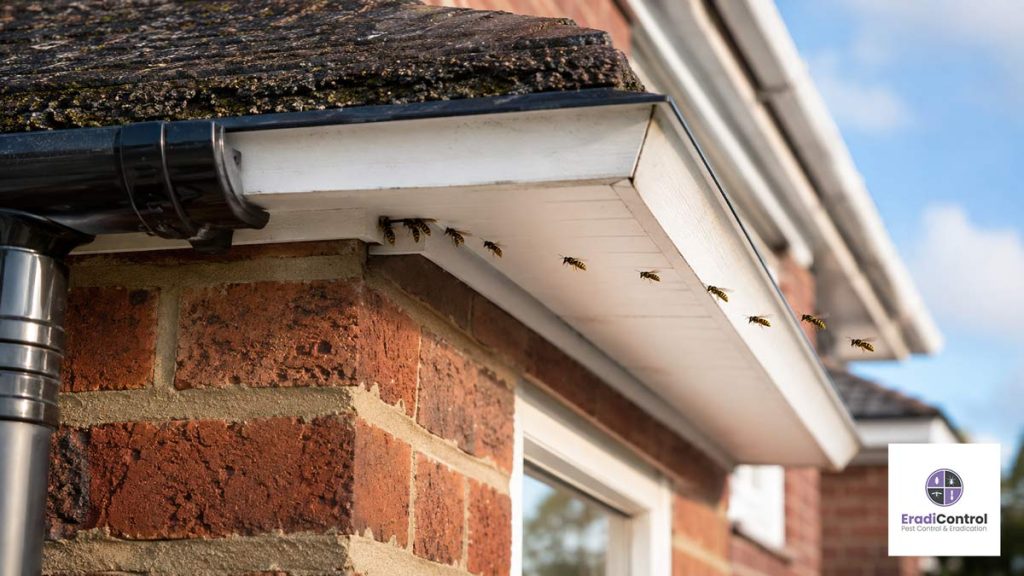
A Regular Flight Path
One of the clearest signs is a steady stream of wasps travelling to and from the same point.
Watch from a safe distance and look for repeated activity around:
- Roof edges
- Air bricks
- Window frames
- Gaps in external walls
- Shed roofs
- Garden banks
A few wasps feeding on flowers does not necessarily indicate a nest. Repeated movement into one specific opening is more significant.
Wasps Appearing Inside the Property
An occasional wasp may enter through an open window. Regular indoor sightings can indicate a nest within the roof, wall cavity or another part of the building.
Wasps may find their way indoors through:
- Loft hatches
- Ceiling gaps
- Light fittings
- Extractor vents
- Window frames
- Service ducts
Repeated sightings in the same room should be investigated.
Buzzing or Scratching Inside a Wall
A mature colony can sometimes be heard from inside the property, especially when the nest is close to plasterboard or a bedroom wall.
The sound may be more noticeable during warm parts of the day when activity is high.
Increased Aggression Near One Area
Wasps defend the immediate area around their nest. If they become agitated whenever someone approaches a shed, doorway, loft hatch or section of the garden, a colony may be nearby.
Do not repeatedly disturb the area to confirm the nest location. Defensive behaviour increases the risk of multiple stings.
Why Blocking a Wasp Nest Entrance Can Be Dangerous
Sealing the visible entrance may seem like a quick solution, but it can create a more difficult problem.
If the entrance is blocked while the colony is active, returning workers may search for another route. Wasps already inside the nest may also begin moving deeper into the building.
This can result in wasps emerging through:
- Ceiling gaps
- Bedroom walls
- Light fittings
- Loft hatches
- Window surrounds
- Internal ventilation openings
Blocking the entrance does not instantly kill the colony. It removes its established exit and can redirect activity towards occupied areas.
The correct approach is to assess the nest, treat it where necessary and only carry out proofing once activity has stopped.
When a Wasp Nest May Need Treatment
Not every wasp nest creates the same level of risk. A nest far from people may be left until the colony dies naturally later in the year.
Treatment is more likely to be appropriate when the nest is close to:
- Doors or windows
- Children’s play areas
- Patios and outdoor seating
- Bedrooms
- Loft access points
- Pet areas
- Paths and driveways
- Schools and nurseries
- Customer entrances
- Food preparation areas
People with known allergies to wasp stings should be especially cautious. Anyone experiencing difficulty breathing, facial swelling, dizziness or a severe reaction after a sting should seek urgent medical assistance.
Why DIY Wasp Nest Treatment Often Goes Wrong
The Nest May Be Larger Than Expected
A small external entrance can lead to a large colony inside a roof or wall. Treating only the visible wasps does not reach the nest.
Household Sprays Have Limited Reach
Aerosol sprays are designed for individual insects, not established colonies inside structural voids. Attempting to spray into a nest entrance can provoke defensive behaviour without controlling the colony.
Access May Be Unsafe
Nests are often located near rooflines, loft edges or high points on outbuildings. Attempting treatment from a ladder while wasps are active creates risks from both stings and falls.
Protective Clothing May Be Inadequate
Ordinary clothing does not provide reliable protection against defensive wasps. Gaps around sleeves, collars and trouser legs can allow insects inside.
For established or difficult-to-access nests, professional wasp control provides a safer and more targeted approach.
Professional Wasp Control in Southampton
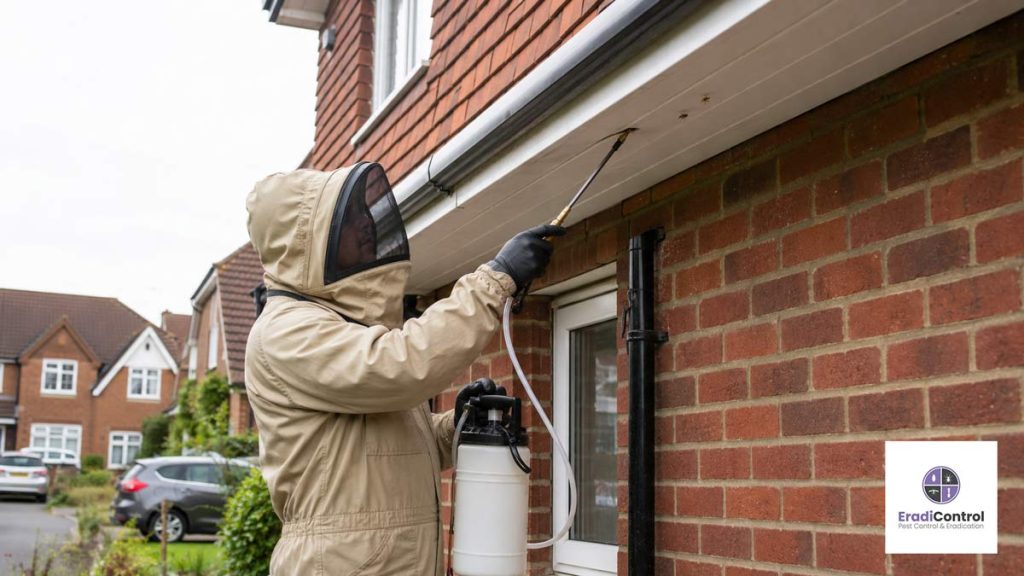
Professional treatment begins with identifying the nest location and assessing how the wasps are entering the structure.
The technician will consider:
- The height and accessibility of the entrance
- Whether the nest is exposed or concealed
- Activity levels
- Risks to occupants and neighbours
- Whether wasps are entering internal rooms
- Whether treatment can be completed safely
A targeted insecticidal treatment may then be applied to the nest entrance or harbourage area. Returning workers carry the treatment into the colony, helping control activity within the concealed space.
Homeowners are normally advised to remain away from the treated area while wasp activity reduces. Some movement may continue temporarily as workers return from foraging.
The nest does not always need to be physically removed. In many lofts and cavities, removal would require unnecessary structural disturbance. Once inactive, an old nest does not continue growing and is not normally reused by a new wasp colony.
Why Late-Summer Wasp Problems Matter for Southampton Businesses
Wasps can cause significant disruption for businesses that serve food, welcome guests or operate outdoor spaces.
Commonly affected premises include:
- Cafés
- Restaurants
- Pubs
- Hotels
- Guesthouses
- Care homes
- Schools
- Nurseries
- Shops
- Offices with outdoor seating
In hospitality settings, persistent wasp activity can affect the customer experience and make outdoor tables difficult to use. Open drinks, sweet foods and waste containers can attract large numbers of workers.
Food businesses should keep external bins closed, clean spillages promptly and monitor repeated flight paths around the building.
Where a nest is affecting customers, employees or food service areas, commercial pest control can provide an appropriate inspection and treatment plan.
When Wasp Activity Requires Urgent Attention
Some situations should not be left to develop.
Urgent attention may be appropriate when:
- Wasps are entering a bedroom
- A nest is beside a main entrance
- Several people have been stung
- The nest is near children or vulnerable adults
- Wasps are entering a school or care setting
- Activity is affecting a food business
- The colony has been disturbed
- Wasps are emerging through internal fittings
In these situations, Emergency Pest Control provides a clear route to professional support.
Do not attempt to knock down an exposed nest, flood it with water, burn it or seal the entrance. These actions can trigger defensive activity and create a greater risk to people nearby.
How to Reduce the Risk of Future Wasp Nests
Inspect Rooflines During Winter
Once old nests are inactive and the weather is cold, inspect the building for gaps around:
- Soffits
- Fascias
- Roof tiles
- Vents
- Guttering
- Utility cables
Repairs should be completed before queens begin searching for nesting sites in spring.
Maintain Sheds and Outbuildings
Check roof felt, timber joints, window frames and doors. Seal unnecessary gaps while maintaining suitable ventilation.
Keep Bins Closed
Use bins with secure lids and clean sugary residue from recycling containers.
Pick Up Fallen Fruit
Apples, plums and other fallen fruit can attract late-summer wasps. Remove overripe fruit regularly.
Monitor Early Nest Development
Small spring nests are easier to assess than mature late-summer colonies. Check lofts, garages and sheds periodically, but do not approach or disturb an active nest.
Avoid Unnecessary Traps Near Seating Areas
Sweet traps can attract additional wasps towards the area they are intended to protect. Positioning and suitability should be considered carefully.
Experienced Southampton pest control specialists can provide advice where a property experiences repeated nesting or has several potential access points.
Wasp Control Southampton Homeowners Can Rely On
A wasp nest becomes a problem when its location brings large numbers of defensive insects into contact with people.
Late summer is when colonies are normally at their largest and most visible. Regular flight paths, wasps entering one structural gap and repeated indoor sightings should all be investigated.
Homeowners should avoid sealing active entrances or attempting treatment from ladders. A professional inspection can determine whether the nest requires treatment and how it can be approached safely.
For local advice and treatment, contact EradiControl for professional pest control in Southampton.
 Domestic Pest Control
 Commercial Pest Control
 Eco-Friendly Pest Control
 Emergency Pest Control


Leave a Reply