

- Introduction
- Why Squirrels Invade Lofts in the UK
- 10 Clear Signs You May Have Squirrels in Your Loft
- 1. Scurrying or Scratching Sounds (Especially at Dawn or Dusk)
- 2. Droppings That Look Like Rat Foul
- 3. Insulation Damage or Nests in the Eaves
- 4. Chewed Wires, Pipes or Woodwork
- 5. Entry Points Around Rooflines
- 6. Squirrel Sightings on the Roof or Guttering
- 7. Strange Odours in the Loft
- 8. Gnawed Entry Gaps or Bite Marks
- 9. Food Stashes in the Loft
- 10. Squirrel Nesting Sounds — Not Just Movement
- Why You Should Act Fast
- How to Confirm Squirrel Presence
- What to Do If You Have Squirrels in Your Loft
- Frequently Asked Questions
- Final Thoughts
Learn the unmistakable signs of squirrel infestations in lofts, how to confirm their presence, and what action to take before damage escalates.
Introduction
If you’ve been hearing scratching, rustling, or scurrying sounds in your loft — particularly during early morning or twilight hours — there’s a strong chance you may have squirrels. While cute in the garden, grey squirrels in lofts can cause serious property damage, from gnawed wires and ripped insulation to contaminated surfaces and nesting hazards.
This in-depth guide will help you identify the key signs of squirrel activity in your loft or attic space, explain why they choose UK homes in the first place, and walk you through next steps including proofing, professional removal, and long-term prevention.
We’ll also link to relevant Eradicontrol services including Rodent Control, Domestic Pest Control, and Emergency Pest Control to help you take swift and effective action.
Why Squirrels Invade Lofts in the UK
Squirrels — particularly grey squirrels (Sciurus carolinensis) — are highly adaptable. Once considered woodland animals, they have become well-established in towns and cities, where lofts offer:
- Warmth and shelter from predators
- Dry, insulated space for nesting
- Easy access through overhanging trees, roof gaps, and vents
- Quiet, undisturbed areas during the day
Autumn and winter are the peak times for squirrel ingress. As natural food sources dwindle and temperatures fall, they look for overwintering sites — and lofts are perfect.
10 Clear Signs You May Have Squirrels in Your Loft
1. Scurrying or Scratching Sounds (Especially at Dawn or Dusk)
One of the most common early indicators is noise. Unlike rats or mice, squirrels are diurnal (active during daylight hours), especially around sunrise and sunset.
Homeowners often describe:
- Fast, heavy scampering across ceilings or loft boards
- Sharp scratching near rafters
- Periodic thumps from jumping or dropping objects
If you’re hearing movement in the morning but not at night, squirrels are more likely than rodents.
2. Droppings That Look Like Rat Foul
Squirrel droppings are similar in size to rat droppings but slightly more rounded at the ends. Unlike rat faeces, they may be dry, crumbled, or scattered across insulation.
For comparison and identification, visit our Rodent Control page for droppings visual guides.
3. Insulation Damage or Nests in the Eaves
Squirrels shred fibreglass insulation, paper, cardboard, and even plastic to build nests (known as dreys). You might find:
- Torn insulation
- Nesting pockets between joists
- Piles of shredded loft insulation in corners
These nests are often located in hard-to-reach roof eaves, behind chimney stacks, or under roof tiles.
4. Chewed Wires, Pipes or Woodwork
Like all rodents, squirrels must constantly chew to keep their teeth from overgrowing. Inside a loft, they chew:
- Electrical wires — a major fire hazard
- Timber joists and beams
- Ventilation pipes and plastic trunking
- Water tank lids or lagging
For landlords and homeowners, this damage is expensive and dangerous. For safety, visit our Emergency Pest Control services.
5. Entry Points Around Rooflines

Common squirrel entry points include:
- Gaps in soffits and fascia boards
- Loose roof tiles
- Uncapped chimneys
- Unscreened vents or air bricks
- Ivy or tree branches that touch the roofline
Inspect your exterior and loft for signs of gnawing or rubbed woodwork. You might also spot tufts of fur around tight spaces.
6. Squirrel Sightings on the Roof or Guttering
Seeing squirrels regularly running along power lines, fences, or your roof is a major clue. Especially if:
- They disappear around the loft area
- You hear movement inside shortly after
- You see them climbing exterior walls or ivy
Many squirrel intrusions are traced back to guttering routes or trees within jumping distance.
7. Strange Odours in the Loft
Squirrels urinate and defecate near their nests. Over time this builds up into a musty, unpleasant smell — especially during warmer weather.
Odours may also result from:
- Decaying food stores (nuts, berries)
- Dead squirrels stuck in cavities
- Mould and rot caused by damp nests
If you smell something sour, sharp or earthy upstairs, an inspection is needed.
8. Gnawed Entry Gaps or Bite Marks
Squirrels can chew through wood, plastic, and even thin aluminium to gain entry. Look for:
- Fresh gnawing near vents or beams
- Shredded roofing felt
- Enlarged holes in soffits or gable ends
- Bite marks on loft hatch edges
This chewing may occur before or after entry — either to get in or to widen a preferred escape route.
9. Food Stashes in the Loft
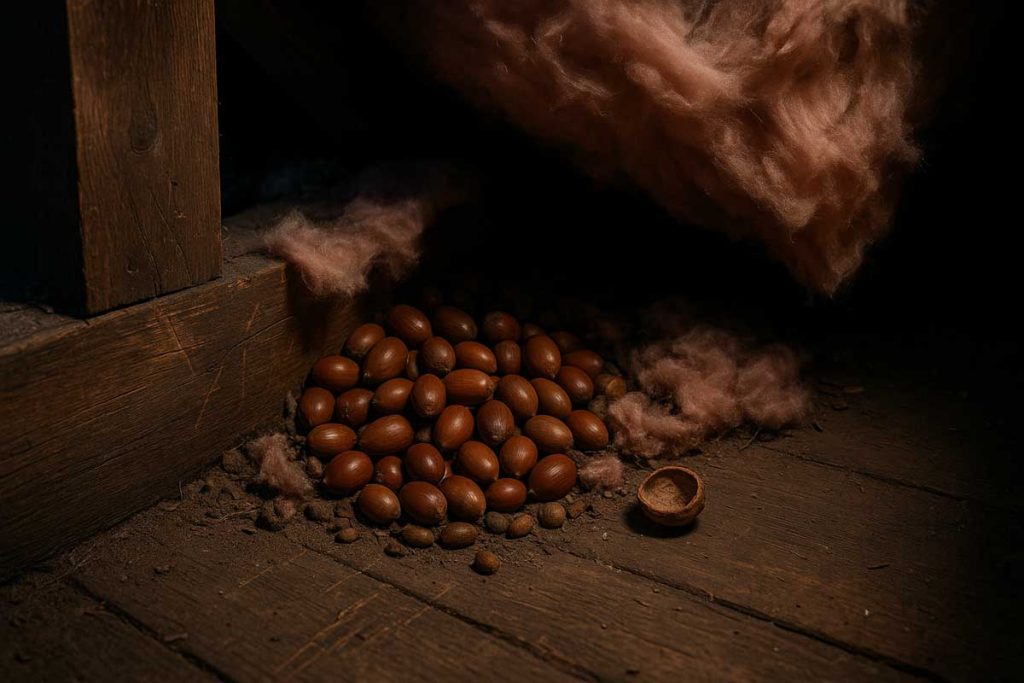
Squirrels are known for hiding food. Inside your loft, you might find:
- Piles of acorns or conkers
- Nuts in loft insulation
- Berries or seed husks
- Food wrappers or packaging dragged from outside
They may raid bird feeders, compost heaps, or pet food dishes and store the findings indoors.
10. Squirrel Nesting Sounds — Not Just Movement
Nesting females make higher-pitched sounds, especially if they have young. You might hear:
- Squeaks or chatter
- Scratching in cycles
- Rustling or chewing in one consistent location
This often occurs in early spring when the second breeding season begins.
Why You Should Act Fast
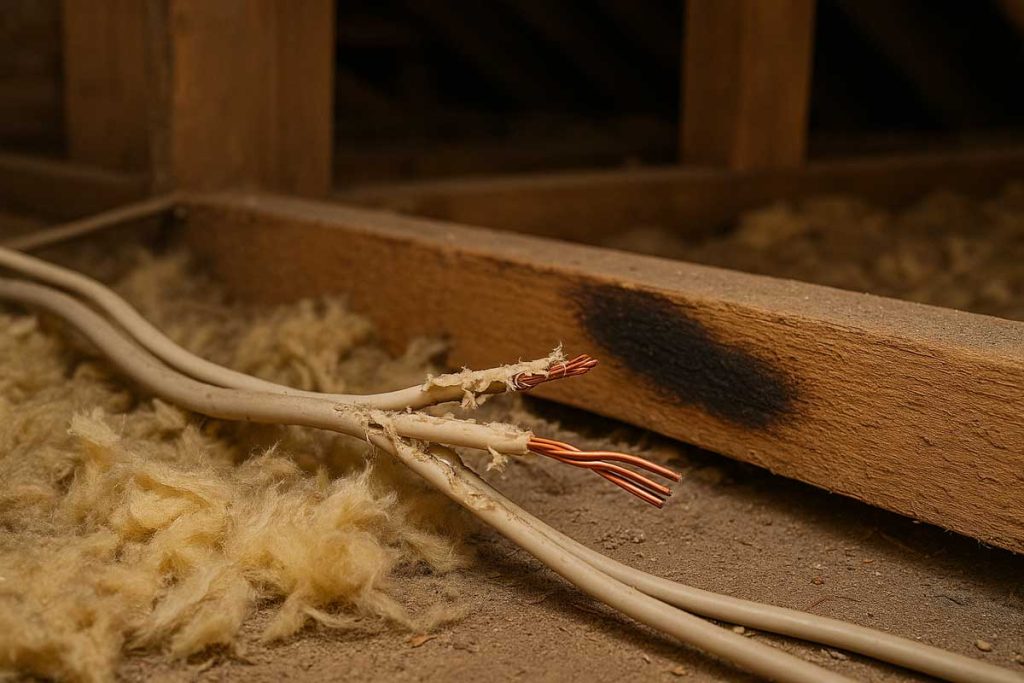
Leaving squirrels in your loft can lead to:
- Structural damage to beams and supports
- Electrical fires from chewed wiring
- Water leaks from damaged pipes or tanks
- Health risks from droppings, urine, fleas, or mites
- Noise and sleep disruption (especially in terraced houses)
- Legal issues — it’s illegal to release a captured grey squirrel back into the wild under the Wildlife and Countryside Act 1981
The longer squirrels are allowed to nest, the harder they become to evict — and the more damage they cause.
How to Confirm Squirrel Presence
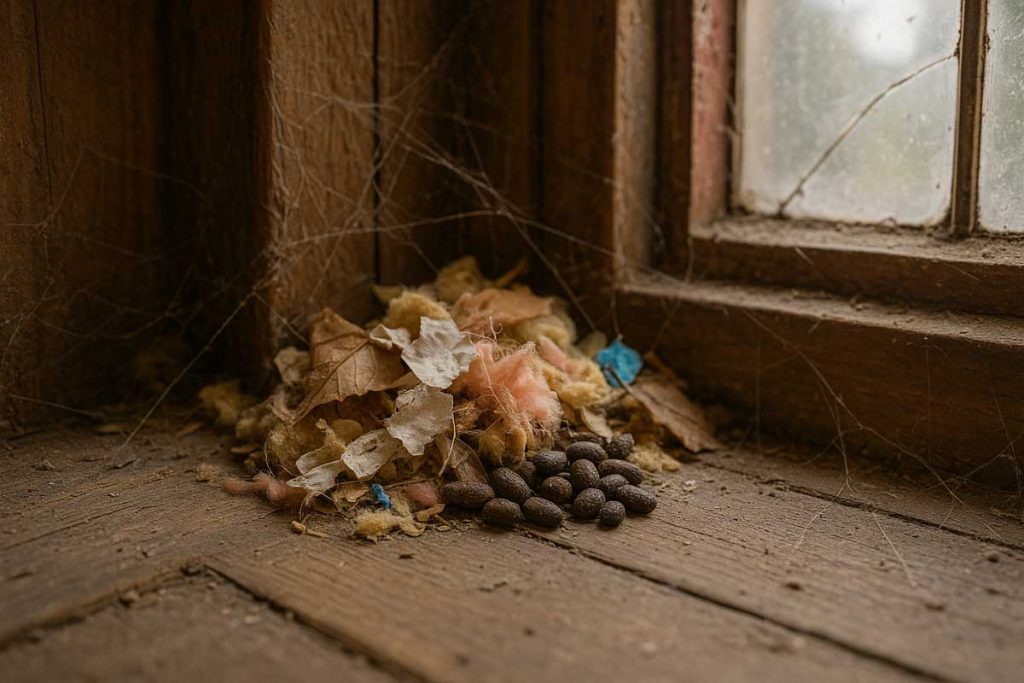
If you suspect squirrel activity, here’s how to check:
- Inspect your loft with a torch (look for droppings, damage, or nesting)
- Place talcum powder or flour on the floor — look for paw prints
- Check outdoor access points and look for chew damage or fur
- Use a motion-sensor wildlife camera in the loft overnight
- Tap the loft area during the day — squirrels may respond or shift position
For safety, avoid confronting squirrels directly. They can bite or scratch when cornered. Use our Domestic Pest Control services to arrange a professional inspection.
What to Do If You Have Squirrels in Your Loft
1. Do Not Block Entry Points Immediately
Blocking an entry hole while squirrels are inside may trap them — causing further damage or death, and possibly leading to legal issues.
2. Call a Licensed Pest Control Specialist
Professionals will:
- Confirm species and severity
- Create a legal, humane removal plan
- Use traps, deterrents, or proofing as needed
- Provide long-term prevention advice
At Eradicontrol, we offer Squirrel Removal as part of our rodent services and cover areas across Christchurch, Bournemouth, Poole, and surrounding towns.
3. Proof the Loft After Removal
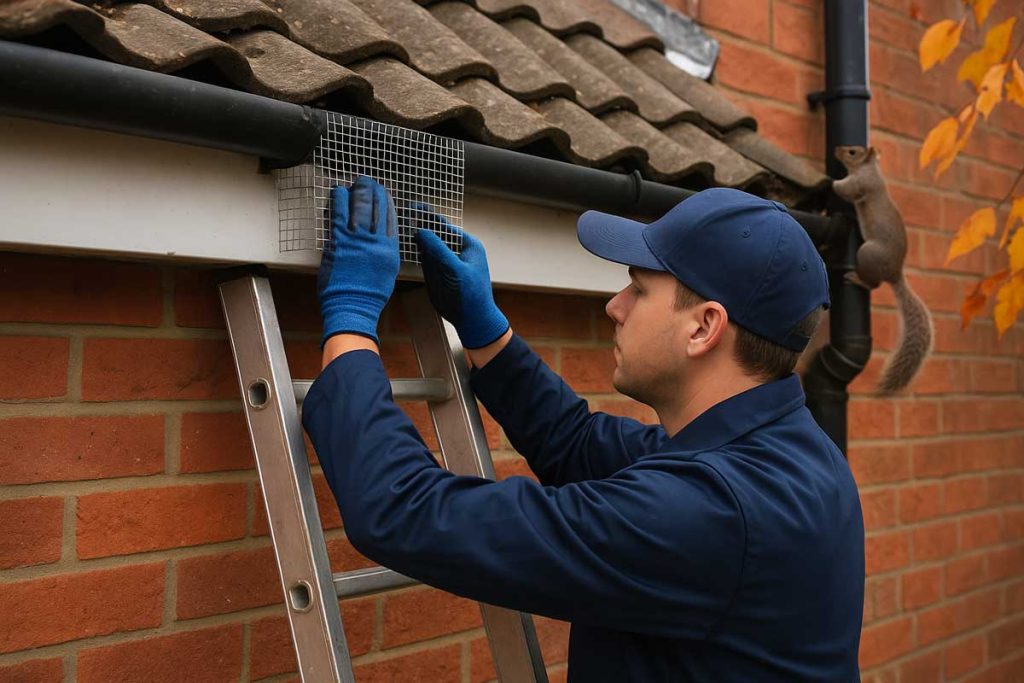
Once the squirrels are removed, a technician will:
- Seal access holes with metal mesh or steel
- Trim back trees or ivy touching your roof
- Repair insulation, ductwork, or wiring
- Decontaminate nesting areas if needed
This ensures the problem doesn’t return next season.
Frequently Asked Questions
Squirrels often enter through roof gaps, broken vents, or fascia boards. They can climb ivy, fences, or trees to access even high buildings.
Autumn and winter are common for sheltering, while spring is peak for breeding indoors.
While they rarely attack, squirrels can bite if cornered. Their droppings and urine also carry pathogens, and they may introduce fleas or mites.
DIY removal is not advised. Grey squirrels are legally protected — they cannot be released once caught. Only trained professionals should handle squirrel removal.
They may nest for weeks or months, returning seasonally unless excluded. Females with young may stay longer and cause extensive damage.
It varies based on access, property size, and severity. Get a quote via our Contact Page.
Yes. Visit our Emergency Pest Control page for rapid help.
Final Thoughts
Grey squirrels in lofts are more than a nuisance — they’re a potential health hazard and a serious risk to your home’s structure and safety.
If you suspect squirrel activity, act quickly. Early signs like scratching noises, droppings, and chewed insulation are warning signs. Don’t wait for them to nest, breed, and multiply.
Contact Eradicontrol today for fast, professional squirrel control across Dorset, Hampshire, and beyond.
👉 Book your inspection or quote now
👉 Explore our Rodent Control services for full information
 Domestic Pest Control
 Commercial Pest Control
 Eco-Friendly Pest Control
 Emergency Pest Control


Hi
I have had Squirrels in my loft in the past (caught) , and now I think they have returned . Theres often 10 minutes of noise around 7.45pm – it sounds like morse code almost , and every time I go up with a powerful headtorch it goes silent and i see nothing , the fibreglass lagging is pulled up here and there and there are traps with peanut butter up there – 4 of them for 3 weeks but no catches. Ive used lots of bleach and apple cider vinegar as a deterrant automatic sensor lights even statues of birds of prey but the noise is still there.
I am now at loss as what to do, please advise ( i am at the top of 3 story flats, the loft is sectioned to just above me)
Regards
Mark
Hi Mark,
Thanks for your comment, that does sound frustrating.
From what you have described, it may not actually be squirrels. The short bursts of noise in the evening, the way it goes quiet when you enter the loft, and the lack of interest in peanut butter traps all point more towards rats. Rats are very cautious and will often stop moving completely if they sense light or vibration. The fibreglass insulation being pulled up also fits rat behaviour.
Bleach, vinegar, lights, and deterrents sadly do not stop rodents once they have established access, especially in loft spaces of flats where entry points can be external and shared.
If you are able to, take a clear photo of any fresh droppings or gnaw marks you find and we may be able to identify what you are dealing with more accurately. From there, the correct trapping and proofing approach can be advised, as squirrel and rat control methods differ.
Happy to help if you can share a bit more detail.