

- Introduction
- Are Termites a Concern for UK Homeowners?
- 1. Signs You May Have Termites in the UK
- 2. Why DIY Termite Treatments Often Fail
- 3. Effective Professional Termite Treatments in the UK
- 4. Preventing Termite Risk
- 5. Why UK Homes Rarely Face Termite Infestations
- 6. Getting Professional Help: What to Expect
- 7. UK Case Study: Devon Termite Eradication
- Conclusion
- Frequently Asked Questions
Introduction
Though termites are rare in the UK, especially compared to woodworm and carpenter ants, they pose a serious threat when they do appear. The only confirmed native infestation found in Devon in 1994 was only declared eradicated in 2021 following extensive intervention. If you’re concerned about potential termite presence in your home, recognising the signs early and acting fast is key.
This article explains how to identify termite activity, treatment options available in the UK, preventative steps, and why professional pest control is almost always necessary. It is fully optimised for commonly searched terms in the UK, such as termite signs UK, termite control UK, how to get rid of termites UK, and termites in Devon.
Are Termites a Concern for UK Homeowners?
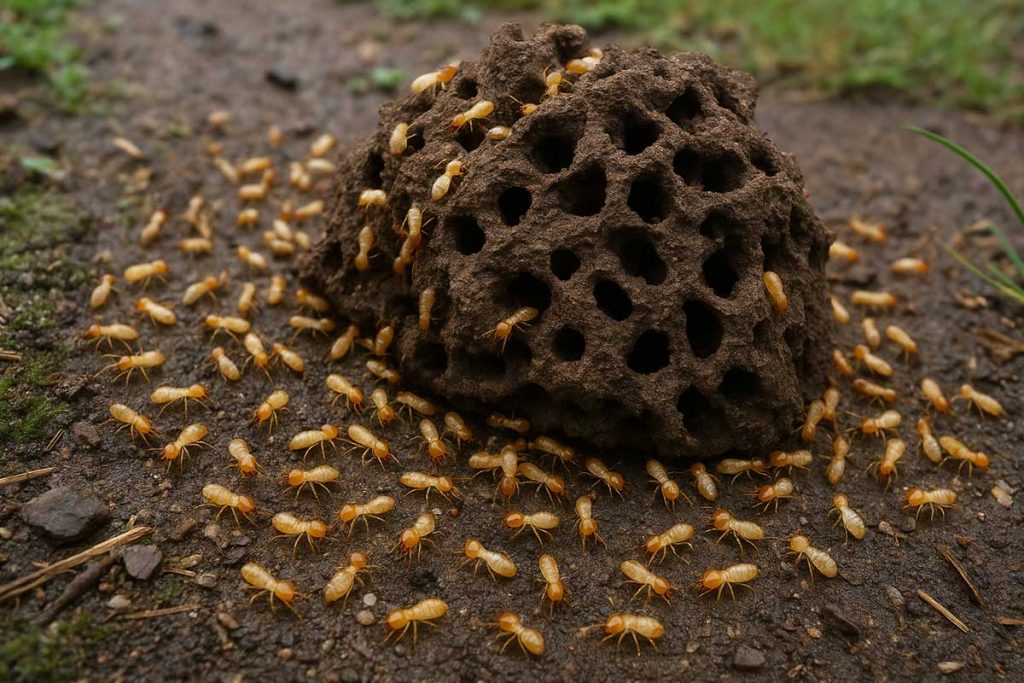
In most of the UK, termites are uncommon. Only Reticulitermes grassei, a subterranean species, has been documented, and only in isolated pockets around Devon.
Local climate and building materials mean that other wood-destroying pests like woodworm (Anobium punctatum), carpenter ants, and deathwatch beetle are much more prevalent throughout the UK, especially in older properties.

1. Signs You May Have Termites in the UK
These are the most important early indicators to check around your home:
- Mud (shelter) tubes on external walls or foundations. These are narrow earthen tunnels built by subterranean termites
- Swarmers or discarded wings near windows and doors. Termite wings are equal in size, unlike ants which have uneven pairs
- Frass: tiny pellet-shaped droppings that resemble sawdust or wood shavings
- Hollow-sounding wood. Tap on beams or skirting boards. Termites eat from the inside, leaving timber weak
- Blisters, buckling or holes in wood panels or flooring. This indicates internal galleries and trapped moisture
- Doors or windows that stick or become hard to open due to warped wood
Note that wood rot and other pests can mimic these signs. A professional inspection is essential for accurate diagnosis.
2. Why DIY Termite Treatments Often Fail
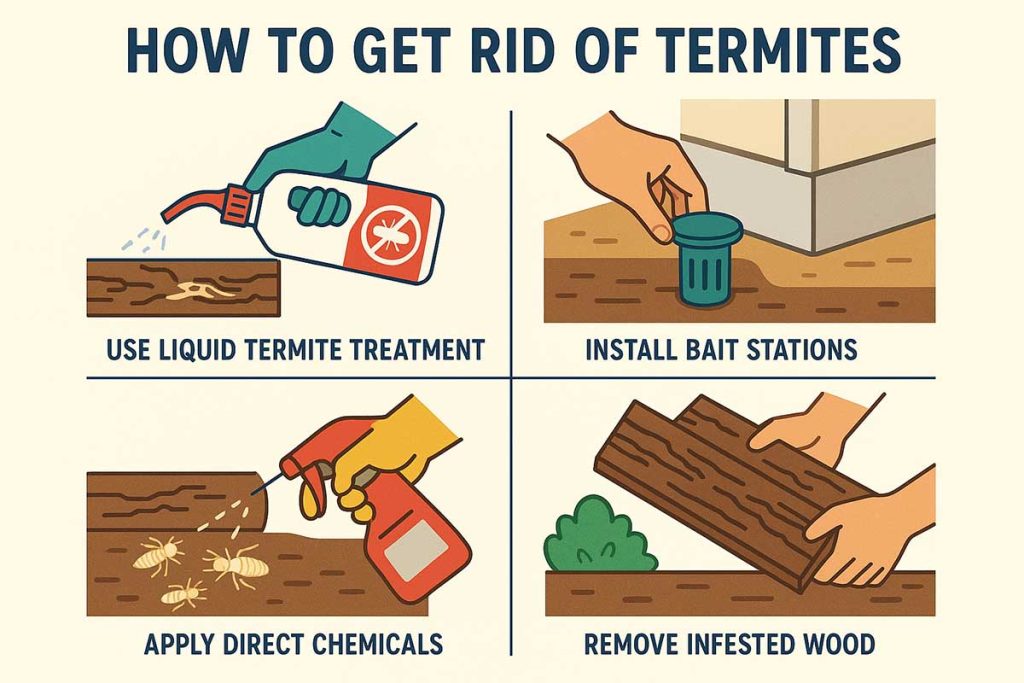
Many DIY termite remedies fail because they cannot reach or eliminate the entire colony:
- DIY treatments such as borax, orange oil or sprays only affect surface wood. Colonies live deeper underground or inside structures
- Bait stations require constant monitoring and proper placement. Incorrect use can delay elimination
- Liquid termiticides must be applied carefully. If done incorrectly, they pose risks to non-target species or fail to form a proper barrier
3. Effective Professional Termite Treatments in the UK
Liquid Termiticides
These are applied in the soil around your home’s foundations. Chemicals like fipronil or imidacloprid kill termites on contact and offer long-term protection.
Baiting Systems
Bait stations contain cellulose and a slow-acting toxin. Termites feed on it and take it back to the colony. Over time, this wipes out the population.
Heat Treatment
Used in small, targeted areas. Heat is applied to raise the temperature in infested wood to kill termites without using chemicals. Effective for isolated infestations only.
Orange Oil and Borax
These natural spot treatments can be useful for localised cases. Orange oil dissolves termite shells while borax disrupts their digestion. Not suitable for larger infestations.
4. Preventing Termite Risk
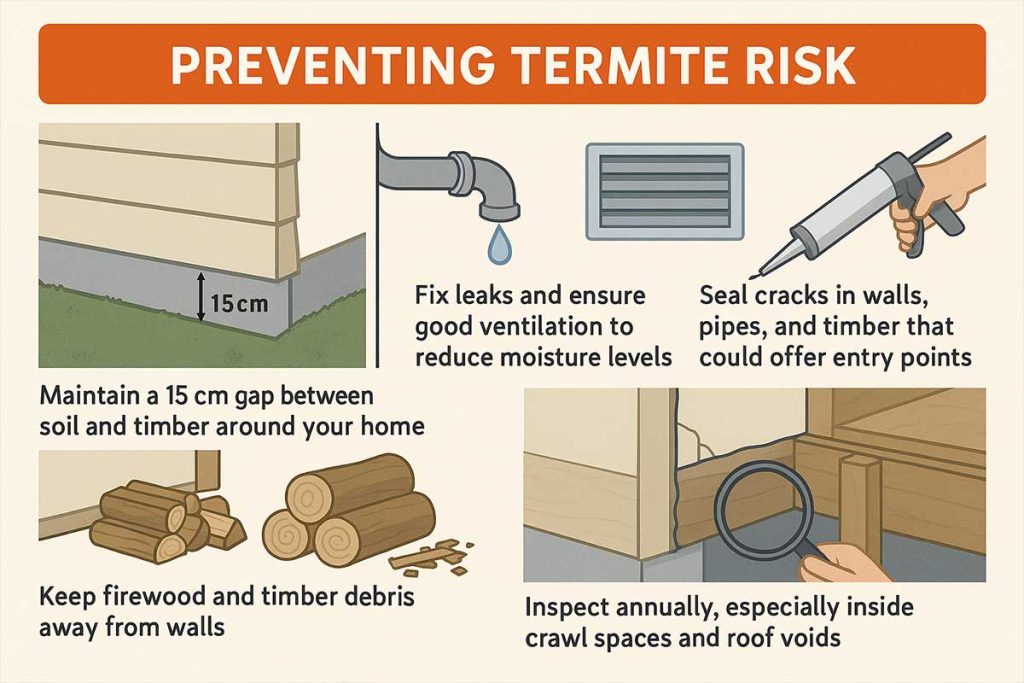
Even though termites are rare in the UK, the following steps help prevent other timber pests too:
- Maintain a 15 cm gap between soil and timber around your home
- Fix leaks and ensure good ventilation to reduce moisture levels
- Keep firewood and timber debris away from walls
- Seal cracks in walls, pipes, and timber that could offer entry points
- Inspect annually, especially inside crawl spaces and roof voids
5. Why UK Homes Rarely Face Termite Infestations
The UK’s cool, damp climate is not ideal for termites. The only known native infestation involved Reticulitermes grassei in Devon. It took over 20 years of treatment and monitoring to fully eliminate.
Even so, imported timber and changing weather patterns could increase risk over time, especially in older or coastal buildings.
6. Getting Professional Help: What to Expect
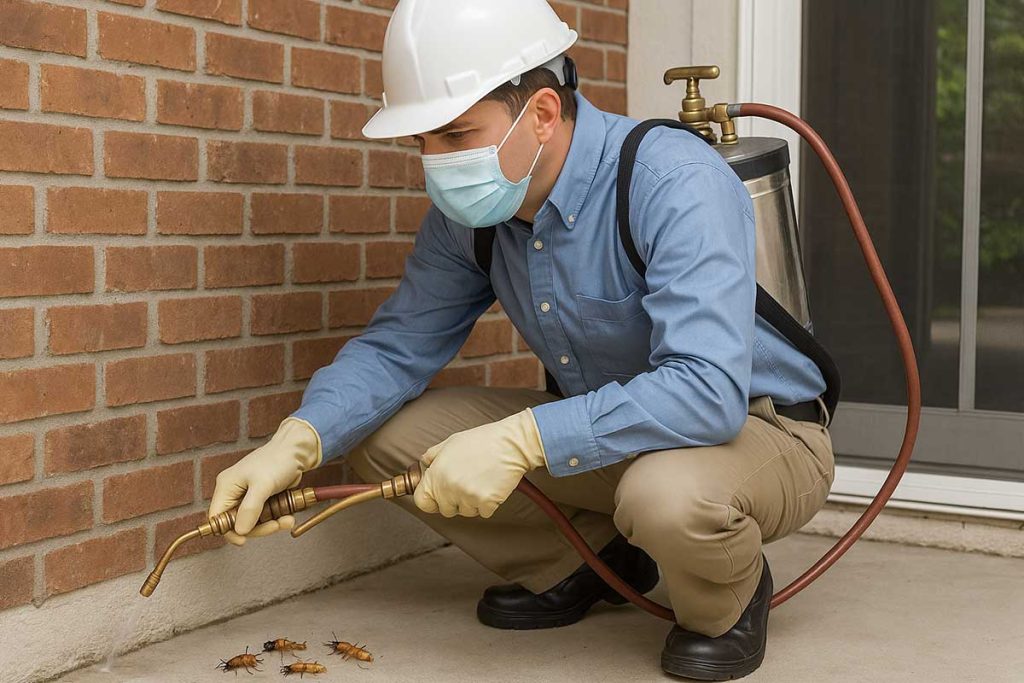
When you contact a pest control company, here is what typically happens:
- An inspection is carried out using tools like moisture meters and borescopes
- The technician will look for hollow wood, droppings, wings, or shelter tubes
- A custom treatment plan will be drawn up, depending on the level of infestation
- Treatment is applied. Follow-up visits are scheduled to ensure the pests do not return
- Ongoing monitoring may be installed if risk is high
7. UK Case Study: Devon Termite Eradication
A small colony of Reticulitermes grassei was discovered in Devon in 1994. The UK government funded a multi-decade eradication program using bait stations and long-term surveillance. After consistent monitoring, the colony was declared fully eradicated in 2021.
This case highlights how difficult termites are to remove once established. Acting early and professionally is critical.
Conclusion
Termites are not widespread in the UK, but when they do appear, the consequences can be costly. Early signs include mud tubes, swarmers, frass, and wood damage. DIY solutions rarely work because they fail to eliminate colonies at their source.
For effective termite control, always hire a licensed pest control specialist. Prevention is also important. Keep timber dry and elevated, reduce moisture, and monitor your property every year.
 Domestic Pest Control
 Commercial Pest Control
 Eco-Friendly Pest Control
 Emergency Pest Control


Leave a Reply